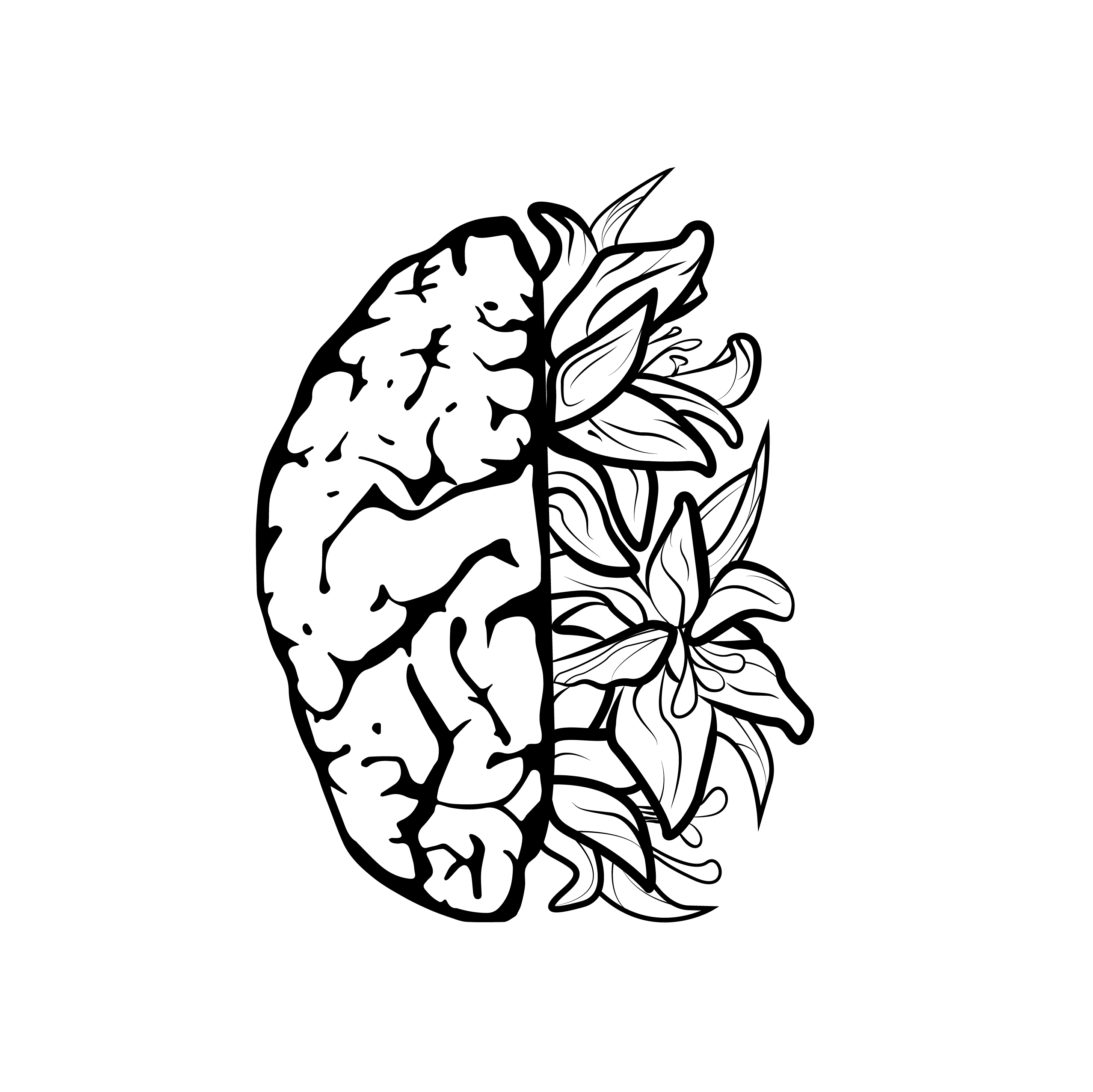

The sweltering heat wave has died down for a moment in Toronto, and it’s cool enough to keep windows open. The air is light and misty. I love the lushness of plant life all around, the freshness it brings to the air. It feels like after one long Winter and a split-second Spring, the fullness of Summer buzz is finally upon us.
Recently, I had several encounters with a patient who feels broken. The patient stories I share in this piece are composite sketches to protect confidentiality and anonymity. None reflects a single individual, but rather several who embody similar patient themes.
This patient was flooded by the shame of what we call in Internal Family Systems (IFS), an exiled part, a deeply wounded and abandoned young piece of the self. The part feared it was damaged beyond repair, and perhaps deserved the abuse it suffered. Protective measures of self-blame, desperation, anxiety, control, self-hate, and rage were tangled with this part, and also flooding her system.
In IFS, we understand that all parts carry good intentions, but hers were fierce in their protection. Some lashed out in shame and blame, keeping her tethered to smallness, invading her with anxious demands, and smothering her creative spark under the impossible weight of perfectionism. Others stood like sentries at the gates of her deepest wounds, trembling with terror, others fearsome monsters hissing menacing warnings: Don’t go there. Don’t look.
In the chaos of this inner storm, she crumbled into tears. “I’m broken,” she wept.
For a long time, I resisted Internal Family Systems in my personal therapy. “I just want to talk about the problem,” I’d say, frustrated, when trying to make sense of a toxic breakup or the sludge of stuckness in my work and life, and pulled into metaphors of my “critic” or “inner child.”
As a therapist, I often rolled my eyes at what felt like an IFS obsession in the field. I leaned more on approaches rooted in metaphor and meaning, such as Narrative Therapy, the depth and dreamwork of Jung, Freud, and Klein, or the clarity and structure of CBT, DBT, and Solution-Focused work.
But slowly, with the help of a few wise supervisors and a growing sense of curiosity, I found myself drawn to therapies that reach into the deeper architecture of the psyche.
In IFS, we begin to see the self not as a single voice, but a chorus of parts, some exiled, holding the weight of pain we couldn’t bear at the time; others protective, managing our lives with vigilance, discipline, or distraction to keep that pain from surfacing. It’s a tender and intricate system, built in love and fear, all in the name of survival.
Parts work is a straightforward and intuitive metaphor. We use the language without thinking: “A part of me wants this…” and “A part of me feels that…” we say. We instinctively recognize that we’re made up of different facets of ourselves: voices, perspectives, desires, very often in contrast and conflict with one another.
Richard Schwartz developed Internal Family Systems (IFS) in the 1980s, building upon Bowenian Family Systems, in which families are viewed as an interconnected network of experiences that interact with one another in their unique logic, tensions, and attempts at harmony.
IFS draws on psychodynamic ideas like protective defences or coping mechanisms that shield tender places in the psyche, what Jung might have called complexes. Like in Narrative Therapy, parts are gently externalized, named, and spoken to, which leaves room for compassion and understanding. Each part, no matter how extreme, is trying to help. Rather than fighting or fixing them (the desires to fight and repair may be parts in and of themselves), IFS invites us to listen and develop a relationship with these inner characters.
The work involves cultivating and identifying with Self Energy, the compassionate, clear, calm and curious observer who can allow parts a seat at the table where they can be witnessed and heard. Through this gentle understanding, exiled parts are invited back into the system and relieved of their burdens.
The concept of the Self has resonated throughout both spiritual and psychological traditions for centuries. In Buddhism, the self is considered fluid, ever-changing, and empty of a fixed identity. Mindfulness teaches us to embody the stance of self by noticing our thoughts and feelings without getting swept up in them. The self is that which observes. Jung characterized the self as an inner wholeness. Often, we refer to our “Higher Self” or our adult self when speaking of wisdom, inner clarity, and compassion, as well as the ability to hold complexity without fear and respond to life not by fixing, but by deeply understanding.
In IFS, the Self becomes not just a wise inner witness but a secure base that heals attachment wounds. When Self-energy is present, even the loudest, most chaotic parts can soften.
It was very early in the morning in the Fall of 2018, and I hadn’t slept. I was lying in a fetal position on a mat with daylight streaming through the large windows of the retreat centre. My body shook with sobs. I’d taken three servings of Ayahuasca throughout the night, and I was still deep in the effects of the medicine.
My heart felt full of a black liquid that had diluted to tears that were softly moving from me without tension, fear, or blame. I felt held by a looming, warm presence; it wrapped around me in a safe, all-encompassing embrace as I purged decades of congealed and cogulated but now free-flowing loss from my spirit.
As I look back on that moment, I realize it was Self that held me and gave me the space and capacity for that healing release.
As I lean more into IFS, I appreciate my self-energy and how I’ve become my own best friend. It didn’t happen overnight, but through a few late-night initiations like the one described above, more tears, journaling, and years spent single, processing broken relationships in which I felt less-than, unworthy, and unloved, I soften into Viola Davis’ wise words and remember, “You are the love of your life. Have a radical love affair with yourself.” The truth is, our best witness and most loyal source of understanding is ourselves.
Last night I was down an IFS rabbit hole, watching a lecture series by psychotherapist Derek Scott. In one video (Derek IFSCA, 2016), he reads aloud from a piece, “The Good Fairy,” adapted by Jan Mullen, about a client of Tara Brach (2011), called “Rosalie.”
Rosalie was a woman in her 30s dealing with addiction, self-harm and a series of destructive and abusive relationships. In her childhood, she was abused by her father. Like my patient, Rosalie suffered from an extreme form of self-hate and felt cut off and broken.
The story tells of Rosalie, just eight years old, sitting cross-legged on her bedroom floor, pleading for freedom from her suffering. She is met by a Good Fairy, a gentle protector, who offers her a kind of magic: the gift of forgetting. The fairy gathers the truth of her pain, wraps it tightly, and tucks it away for a future self, one strong enough to bear it.
As Derek reads, tears rise in his eyes, and I think instantly of my patient, the young part of her who, in her moment of desperation, may have made a similar pact. Perhaps a fairy visited her too, offering the kind shield of amnesia, trading memory for survival. That conversation may be long forgotten, but its residues of tension, bracing, anxiety, and rumination remain.
Now, held in the container of therapy, with the steady presence of her adult self, she begins to courageously turn to the parts of her that have been hidden, not all at once, but piece by piece.
She lifts each fragment, holds it in her hands, and witnesses it with care. It is akin to the poem Francis Weller shares in his book, The Wild Edge of Sorrow, titled “The Healing Time.”
Finally, on my way to yes
I bump into
All the places
Where I said no
To my life
All the untended wounds
And red and purple scars
Those hieroglyphs of pain
Carved into my skin and bones,
Those coded messages
That send me down
The wrong street
Again and again
Where I find them,
The old wounds
The old misdirections
And I lift them
One by one
Close to my heart
And I say holy
Holy
Imagine being your own best friend, picking up your wounded parts with curiosity, and holding them with compassion, reverence, and love. What are you here to show me? How are you protecting me? I’m sorry that happened. I love you.
Trauma and unprocessed pain live in our bodies. In The Myth of Normal, Gabor Mate describes how these trapped emotions can lead to physical ailments, sometimes even in the form of autoimmune diseases. Shame, guilt, and resentment can fester, turning inward and cutting us off from our experience of self, thereby dulling our access to life, love, and purpose.
And yet, this dulling is not a failure, but rather a protective shield, cushioning us from what was once too overwhelming and destructive to be fully felt in too-young minds and bodies. And so the fairy tucked the pain away so we could survive and go on.
In my experience, when patients find steadiness in their nervous system, a sense of safety and trust, and have sufficient support around them, or a stable rhythm in their work and self-care, old pain feels safe enough to surface. Sometimes parts make themselves known as physical discomfort, waves of anxiety, dissatisfaction, loss of purpose, stormy relationships, or crushing overwhelm. Very often, there’s a sense that life could be so much more.
Grief, too, often stirs these voices. Usually, patients don’t feel quite ready to meet them yet. But, as the story goes, the pieces start to emerge anyway, through “vague discontents, questions, or flashes of images,” the clues left behind that lead the way through the wilderness to a place of integration.
And, the fairy promises that even if you don’t feel it, you will be “strong enough and old enough to bear the truth” in the comforting special friendship of your grown-up self, who holds you as you find and uncover the lost pieces.
To my patients, wounded readers, or anyone in pain who may be carrying the heavy feeling of broken hopelessness, I want you to know: it will get better. You are far stronger than you realize.
We’re fighting battles against injustice, loss, poverty, and grief: real, raw wounds of our time. But take heart in this: your wise, adult Self, your faithful friend, is with you now, holding space and welcoming whatever arises. Curious, compassionate, clear, calm, connected, courageous, confident, and creative: this Self is your birthright.
From its safe and loving presence, you can examine those broken, hopeless fragments of despair, lift them to your heart, if you’re willing and say, Holy.
Holy.
THE GOOD FAIRY
This story is adapted by Jan Mullen from a report by Tara Brach (2011) of a client, “Rosalie,” encountering a guide in session. Jan Mullen, while sharing the story, warns, “Stories are powerful medicine, administer with care.”
From the corners where the silence remains, there came the urgency to go to a mountain top and scream out the whole truth. I sent out a prayer to God, to the universe—“It’s too painful, I can’t take it!”—and she came to me, the power of my mind, the energy of the universe, an angel of God in blue, like the Good Fairy in the Wizard of Oz, waving a wand.
I sat cross-legged on the floor of my bedroom, looking up, about 8 years old.
She said, “Sweetheart, here’s the deal. There’s too much going on here, and I don’t have the power to make it go away, to make it be okay, or even to help you cope with it in a way that’s not going to cause you some pain. What I can do, Sweetheart, is help you get through this time now, help you get through it as it unfolds. It will come back, but it will come back to you only at a later time, when you’re able to handle it, and there will be someone to help you.”
So I said, “Okay, because I can’t take it anymore.”
She waved her wand and said, “I am going to send things that are happening into different parts of your body, and your body will hold them for you like a treasure chest, like a time capsule.
“Your heart, your heart is broken, and I’m going to have to let your rib cage close in around your heart and let your heart constrict so that you don’t feel the pain of your heart breaking.
“And I’m going to tighten up your neck and let it be a fortress with very thick, round walls, so that what you are feeling doesn’t get up to your mouth, and you can’t speak the words. You can’t cry out for help and can’t scream out in rage. And you can’t breathe too deeply to feel what’s going on in your body.
“And that fortress will keep the knowledge of what’s happening in your body from connecting with your head, so that you will not be fully conscious of what’s going on. And I will tie up your ears, so that you hear but don’t take in too much.
“And this is what I will do with your mind. It will store the truth in a deep place, sealed away behind steel doors of fear. But it will, for now, help you to live with, accept, and believe the lies you are told —that you deserve this and that this is the way your life has to be.
“I want you to be fairly still as a child and rather shy, so we don’t interrupt what we’re going to put very carefully in place. And it will stay this way. You may struggle to feel close to people, but it will be a way for you to survive. And you, my darling, will be a very functional human being despite all this pain, because you have a strong spirit and can hold all this in. And I will be helping you.
“You will not forget everything. You will be visited by vague discontents, questions, or flashes of images that will lead you, like markers on a path, to explore what happened. And I will leave a voice inside of you, like a spark of light, that will urge you to reconnect with your whole self, to find this person you are now, who is calling out for help and whose heart is utterly breaking. It may not be clear, this voice! It will manifest as an urge inside of you, but it will be your lost self speaking through your aching body, urging you to come back and find yourself.
“When the time is right, you will begin to open up. It will be a very long process. It may take as long to heal as you’ve been in pain and the frozen place. Finally, your body will no longer be able to contain all this. Your muscles will begin to give way, and you will feel an urgency to engage in physical healing.
“This will initiate the process of truly unwinding your body and releasing what it has been holding for all these years. There will be physical as well as emotional pain in the process. But by then you will be strong enough, safe enough and old enough to bear the truth, and you will have a special friend, who will be the grownup you, who will hold you as no one else can, as you find yourself again.
“As all this begins to unwind, you will struggle to release your mind from the falsehoods it had learned so you could survive, and the doors of fear barring it from the truth. The mind may at first believe that only the person who gave you this pain has the power to take it away, and there will need to be a period of building trust that this is not true.
“You will struggle to release the flow between the mind and body and reconnect fully. But you will do it, because you are a capable person with a heart yearning to love. I don’t know exactly how it will unfold, but the universe will move you through it. You will have to be very patient, very brave, very courageous, but it will be your training, your fire walk, your healing. And when you are through it, you will be a whole person: new but still the same.
“Now I want you to go to bed. I will wave my wand, and you will fall asleep. When you wake up, you will forget I was here. You will forget you asked for help, and you will not feel your daily pain.
“This is the only way I know to get you through this. You are a beautiful child. I don’t know the reasons this terrible burden came to you, but I love you, and God loves you. You will have to love yourself enough to heal, so that the rest of your life will be lived to its fullest, full of light. The memory of pain will still be there, but it will be in perspective. One day, you will be whole again.
“Until then and for always, I love you.”
References:
Brach, T. (2011, July 1). The power of radical acceptance: Healing trauma through the integration of Buddhist meditation and psychotherapy. Tara Brach. https://www.tarabrach.com/trauma/
Derek IFSCA. (2016, October 13). IFS for Therapists #4 Common Dynamics [Video]. YouTube.
Maté, G. (2022). The myth of normal. Ebury Publishing.
Schwartz, R. C. (2017). Internal family systems therapy (1st ed.). Guilford Publications, Inc.
Weller, F. (2015). The wild edge of sorrow: Rituals of renewal and the sacred work of grief (3rd ed.).


