by Dr. Talia Marcheggiani, ND | Feb 9, 2012 | Ayurvedic Medicine, Balance, Cooking, Diet, Digestion, Food, Nutrition
I’m sure all of you can name the 4 taste receptors that scientists have discovered on the tongue: sweet, sour, salty and bitter. However, Ayurvedic medicine has categorized food properties into 6 distinct tastes.
Some of the constitutional doshas require more of certain tastes than others, but it is thought that well-balanced meals encompass all 6 of the Ayurvedic tastes, covering the entire spectrum of food quality. The 6 Ayurvedic tastes are: sweet, sour, salty, bitter, pungent and astringent.
According to Ayurveda, balancing the 6 tastes in the diet aids digestion, ensures physical, emotional and mental well-being and helps decrease aggravation of the dominant dosha of an individual.
About the tastes:
Sweet:We can all easily identify sweet foods, such as honey and fruits. However, sweet taste also includes carbohydrates like rice and other grains, potatoes and milk. Sweet functions include building up tissues and calming nerves.
Sour: Includes acidic fruits such as oranges, lemons and grapefruit, fermented foods (yogurt, kambucha, sauerkraut), alcohol and vinegar. Sour taste acts to cleanse the body and increase the absorption of nutrients.
Salty: Foods that contain salt, from minerals, meat or seaweed. Salt acts to stimulate digestion and improve the taste of food. It also calms nerves and relaxes the mind.
Bitter: Includes dark leafy greens and certain herbs and spices. We often lack enough bitter tasting foods in our Standard American Diet, however, bitter taste is important for detoxification and digestion. According to our Botanical Medicine class, it improves appetite, aids digestion and psychologically “increases one’s appetite for life”.
Pungent: Foods that are spicy, including herbs, peppers and garlic. Pungent tastes increase metabolism and aid digestion.
Astringent: These are foods that produce a “dry” taste in the mouth. Foods that are astringent include legumes, certain fruits, such as apples and pears, certain vegetables, tofu and herbs. Astringent taste helps “dry” fats, thereby aiding weightless, and tightens tissues. In Western Herbalism astringent herbs are used for wound healing and tonifying mucus membranes of the skin, respiratory, urinary and digestive tracts.
Although having a balance of the 6 tastes is beneficial for a healthful diet, increasing certain foods in the diet can help balance the dosha that one is predominant in:
Vata Dosha is balanced by sweet, salty and sour tastes.
Pitta Dosha is balanced by sweet, bitter and astringent tastes.
Kapha Dosha is balanced by bitter, pungent and astringent tastes.
In the Western world we rely heavily on sweet, sour and salty tastes, through a diet high in carbohydrates, processed foods (high salt content) and alcohol (sour). Considering the fact that we live in a Vata-aggravated society, it is comprehensible that our culture gravitates to these tastes more than the other three. However, the leading rise in obesity (Kapha aggravation) could be reflective of the lack of bitter, pungent and astringent tastes in our diets.
In my Ayurvedic course we analyzed various ethnic diets and found that cultures with a set of dietary practices usually include all 6 tastes in their cuisine. We examined Indian, Thai, Persian, Ethiopian and Chinese cuisines, but I also feel that even Italian food represents a balanced diet, according to Ayurveda.
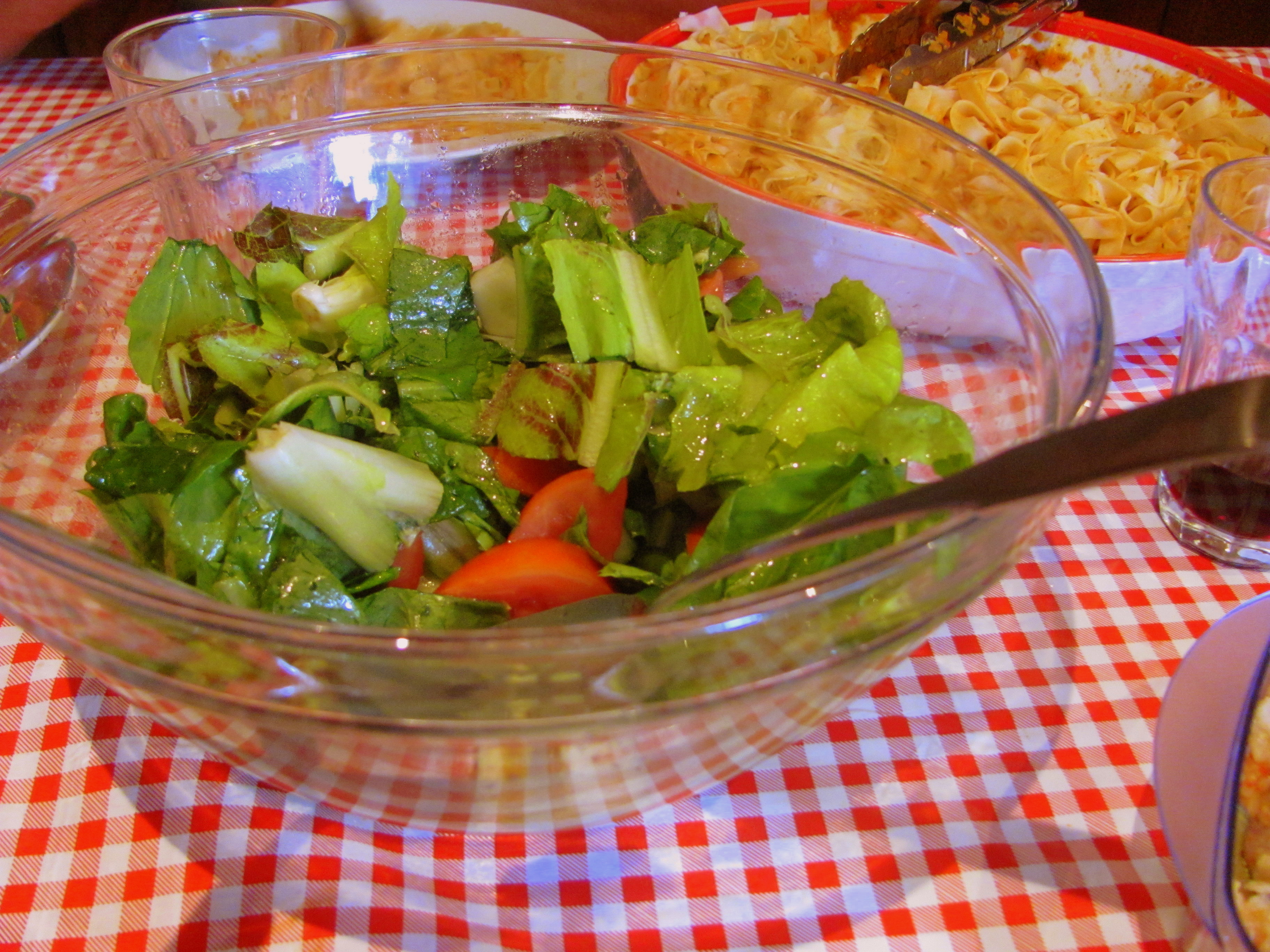
If we take a typical Italian meal – pasta with meat sauce and Insalata Della Nonna– we see that all 6 tastes are represented.

The sweet tastes are represented by the pasta (be it rice pasta, spaghetti squash or another form of pasta), the tomato sauce and some of the vegetables in the salad.
The salty tastes are from the salt and meat added to the sauce.
The sour taste is from the homemade red wine vinegar salad dressing (and the wine!).
The bitter taste comes from the radicchio and fresh garden lettuce in the salad.
The pungent tastes come from the garlic and chili peppers used to make the pasta sauce.
The astringent tastes comes from the fennel and celery in the salad and the apple for dessert.
Dissecting your daily meals for tastes that your diet may be missing is a fun and therapeutic practice. Use it to see how your own diet (whether it is one you have invented for yourself or the one dictated to you by your family or country of origin) may be improved by adding certain flavours. I find it aids me in achieving balance in my own diet, especially when traveling to a new country or designing my own meals. Practicing mindful eating is helpful to detect and distinguish the flavours of your favourite food staples. Chew them slowly and try to decide if the food in your mouth is sweet, salty, sour, bitter, pungent or astringent, or a combination of two or more of these flavours.

by Dr. Talia Marcheggiani, ND | Feb 8, 2012 | Cooking, Dessert, Diet, Digestion, Gluten Free, Nutrition, Recipes
 After reading and, therefore, being terrified by the book “Wheat Belly” by William Davis, MD, I decided to continue with my attempt to jump on the gluten-free bandwagon (or just run alongside it from time to time).
(more…)

by Dr. Talia Marcheggiani, ND | Feb 3, 2012 | Cooking, Digestion, Food, Nutrition, Recipes, Salad
 When people picture “healthy food”, chances are high that the first food that comes to mind is salad, especially nutrient-rich spinach salad. According to Traditional Chinese Medicine, raw foods require more digestive “heat” to break down and, therefore, are not recommended in the winter, unless accompanied by warming spices, or soups and stews.
(more…)
by Dr. Talia Marcheggiani, ND | Feb 1, 2012 | Balance, Diet, Exercise, Food, Meditation, Mental Health, Mindfulness, Music, Nutrition, Sleep, Technology
We’ve all heard of the potential health implications of spending too much time wired in. Whether it’s the radiation from our cell phones, the arthritis that sets in our thumbs, the damage done to our interpersonal communication skills or the strain on our eyes, we’re constantly told about the negative health implications of our technological age.
However, as much as we hear these warnings, there is no chance that our electronic lifestyle is going anywhere soon. Wireless technology, the internet and smart phones are here to stay. They serve as essential tools for the rapid-paced society we live in. While I advocate taking an “electronic-free” day off each week to give your nervous system a break, I wonder if all this technology can actually have a positive impact on our health. Here are my favourite apps for Android and iPhone that can promote your health rather than hinder it.
1) Pocket Yoga: Of all the Android yoga apps out there, this one is by far my favourite. It’s
not free (it costs $3) but it actually takes you through a series of yoga workouts rather than just showing you a list of poses. The app gives you the option of choosing from three different settings (mountain, ocean or desert), three different workout lengths (30 minutes, 45 minutes or 1 hour) and three levels of difficulty (beginner, intermediate, advanced). When staying at my aunt’s cottage I roll my yoga mat out on the grass, put my phone beside me and get into the flow.
2) Sleep as Android (or Sleep Tracker for iPhone): The idea behind the mechanism of this app is that, when we sleep lightly we move around more than when we enter states of very deep sleep. With this app, you set your alarm and put your phone on your mattress while you sleep and the sleep tracker senses your movement throughout the night. Rather than being jarred out of a deep and comfortable sleep, your phone waits for you to enter a state of lighter sleep, up to half an hour before your desired wake up time, before sounding the alarm. Using this app has helped me greet the day with a less groggy disposition and makes me feel like I’ve slept more soundly. The sleep tracker also produces a graph when you wake up, giving you information about the quality of sleep you experience each night. Take advantage of the 14-day free trial and see how this app makes a difference in how you begin your mornings.
3) Meditation Oasis: These apps may cost $1 each, but are very relaxing, guided audio meditations. I listen to these audio meditations to help relax both my body and mind (especially after a stressful day) before going to sleep. They’re also very useful guides for those who want to start a daily meditation practice but aren’t sure how to begin or even for those who just need a mental break from study or work. If the internet is available, you can go online to the listening page at meditationoasis.com and choose from a free list of 43 different guided meditation podcasts for varying levels of expertise.
4) 8tracks: Whether you need a fast-paced playlist to accompany your daily workouts or some calming music to help you relax, 8tracks will have an awesome compilation of songs for your musical taste. We live in a visual culture and sometimes it’s therapeutic to turn off the visual stimulation, steep a cup of tea and listen to some soothing, stress-relieving music. You can download this free app onto your phone and browse through a variety of music playlists according to genre.
5) My Fitness Pal: This free app is a portable tool that can be used anytime for tracking your daily nutrition. You simply use the database to search for and enter in the foods that you eat each day. This app helps you track weight loss goals by giving you a personalized caloric intake target based on your age, weight, gender and activity levels. It’s also very useful for people with other diet goals, such as limiting sugar, increasing dietary fibre intake or consuming an adequate dietary intake of micro-nutrients (vitamins and minerals). By using this app you’ll have a more accurate view of your daily nutrient intake and will be motivated to make healthier food choices.
by Dr. Talia Marcheggiani, ND | Jan 27, 2012 | Cooking, Diet, Digestion, Food, Nutrition, Recipes
One of my favourite dishes for the cold, sluggish winter season is this hearty and invigorating peanut soup. This delicious soup is easy to make and is better (and cheaper) than going to a Thai restaurant. I guarantee you’ll serve yourself a second bowl. Elimination or Paleo dieters can substitute the peanut butter for almond or cashew butter.
Here’s how to make it:
Spicy Thai Peanut Soup
You need:
- 1 tbsp olive oil
- 2 medium onions, cut into large pieces
- 1 large green pepper, cut into large pieces
- 1 large red pepper, cut into large pieces
- 2 pieces of garlic (cut into fine pieces)
- 1 can whole tomatoes, cut into quarters, use the juices
- 10 cups chicken broth
- 1/2 tsp ground black pepper
- 1/2 tsp chili pepper flakes
- 3/4 cup uncooked quinoa
- 1/2 cup natural unsalted peanut butter
In a large soup pot, heat oil over medium-high. Sauté onions, bell peppers and garlic for about 5 minutes, or before the garlic and onion begins to brown. Reduce the heat to medium, add tomatoes and cook for 5 to 10 minutes. Pour in tomato juice and chicken broth, add black pepper and chili pepper flakes. Bring the pot to a boil over medium-high heat, add quinoa, then reduce heat to low. Simmer, partially covered, 45 minutes. Add peanut butter all at once, stirring until it melts. Bring soup to a simmer. Enjoy!
This recipe can also be made in slow cooker, while you’re at your work or place of study. Sauté the onion, bell peppers and garlic first, then add them to the slow cooker with the rest of the ingredients, except the peanut butter, and set to LOW. When you arrive home at the end of your day, add the peanut butter, and serve!
This is an adaptation of a recipe from: http://www.epicurious.com/recipes/food/views/Peanut-Soup-232423#ixzz1jXmC7TnH
by Dr. Talia Marcheggiani, ND | Jan 23, 2012 | Cooking, Diet, Food, Nutrition, Recipes, Supplements
At my school, The Canadian College of Naturopathic Medicine, smoothie breakfasts are very vogue. I personally haven’t fallen to the tradition, preferring to start my day with something more substantial and warm, like steel cut oats. However, after the 2012 Supplier Show at our school, I ended up with a few single-portion packets of protein powder. So, for one week, I decided to give smoothie breakfasts a try.
Here is a winning recipe I came up with:
Black and Green Chocolate Banana Smoothie
– 1 packet of chocolate protein powder by Cytomatrix (this is the product I happened to have a sample of, but you can choose your brand of preference)
– 1 ripe banana
– 1/2 cup of blackberries
– 1 cup of almond milk (unsweetened)
– 1/2 cup of water
– 1 tbsp of chlorophyll (can be replaced with 1/2 cup of raw spinach, kale leaves or any other green of choice)
Blend all ingredients together until smooth and enjoy!
The smoothie came out thick, dark and delicious! I usually have breakfast around 6:30am in order to begin my morning commute to CCNM. As a result, I end up feeling hungry around 10am, even with a substantial breakfast of steel cut oatmeal. However, this smoothie got me through my morning acupuncture and pharmacology classes without so much as a hunger pang. It’s also a fast, easy and delicious way to increase fruit and vegetable intake in the morning.
After this week-long experiment I’ll definitely be making more protein and antioxidant-rich smoothies to get me through my mornings!