On Pet Loss, Crossing the Rainbow Bridge, and The Places Grief Lives
My grief is tremendous, but my love is bigger.
– Cheryl Strayed
For my entire childhood, I wanted a dog. I didn’t care what kind of dog it was; I just wanted one. A sensitive child entering the world of broken promises and ruptured friendships, I craved the unconditional love of an animal. I would read to him and tell her about school: my dissociated teachers, the kids who had hurt my feelings, and my dreams and aspirations. I imagined he would sit there, forever interested, lovingly listening.
My parents promised my brother and me a puppy when I was nine and he was six. Instead, we got hamsters, gerbils, fish, and turtles.
After spending Christmas with my family in Canada, I returned to Bogota, Colombia, with my ex-boyfriend, Joe. I was 24 years old and taught English for two years out of university. I walked into our shared apartment, set down my things, looked up, and there he was! A tiny, black and tan Yorkshire terrier—Coco Loco.
I sat with him across my lap. He tucked his little head inside the crook of my elbow—lights out. His soft head and cold, wet nose tickled the inside of my arm. He and I would sit this way, my arms around his curled-up body, his head tucked—yoked together in warmth and comfort until his last day.
Small, rambunctious and mischievous, Coco was a ferocious ball of unbridled puppy joy. He chewed everything, peed everywhere, and once unravelled an entire roll of toilet paper while waiting for me to get out of the shower.
We walked everywhere in Bogota. He travelled on buses and accompanied Joe and me on long hikes through the Colombian jungles and countryside, harassing chickens and balancing on logs stretched over deep, rushing streams. He was curious and intelligent, head cocked, ears alert, always with some agenda.
When it was time for me to leave Bogota and return to Toronto to start naturopathic college, Coco flew with me. Emerging from the confines of his travels, he was soon bounding around my parents’ yard, paws touching new soil. He loved Canada: the snow, the squirrels, his family. He grew to be 16 pounds, giant for a Yorkie.
For the next 15 years, Coco was my faithful shadow. He was there throughout my four years at the Canadian College of Naturopathic Medicine, witnessing me studying for and passing my board exams. Coco joined me on the ride to the centre for the first round of board exams, perched on my knees. As we pulled into the parking lot, he sensed my anxiety and started shaking. He was my emotional mirror, our bodies empathically in tune.
He watched me graduate and start my clinical practice. He saw me fall in and out of love, move, try and fail, and try again, his nose nudging my tears after every heartbreak and disappointment.
My naturopathic medicine practice moved online in 2020, and I became a psychotherapist in 2024. Coco was at my feet during every patient encounter, absorbing all your stories and witnessing your humanity.
For 11 years, Coco volunteered as a St. John’s Ambulance Therapy Dog. Once a week, he would proudly wait for my dad by the door in his uniform—a bandana that read, “Please Pet Me.” They’d roam the hospital halls, bringing cheer to patients and burnt-out staff.
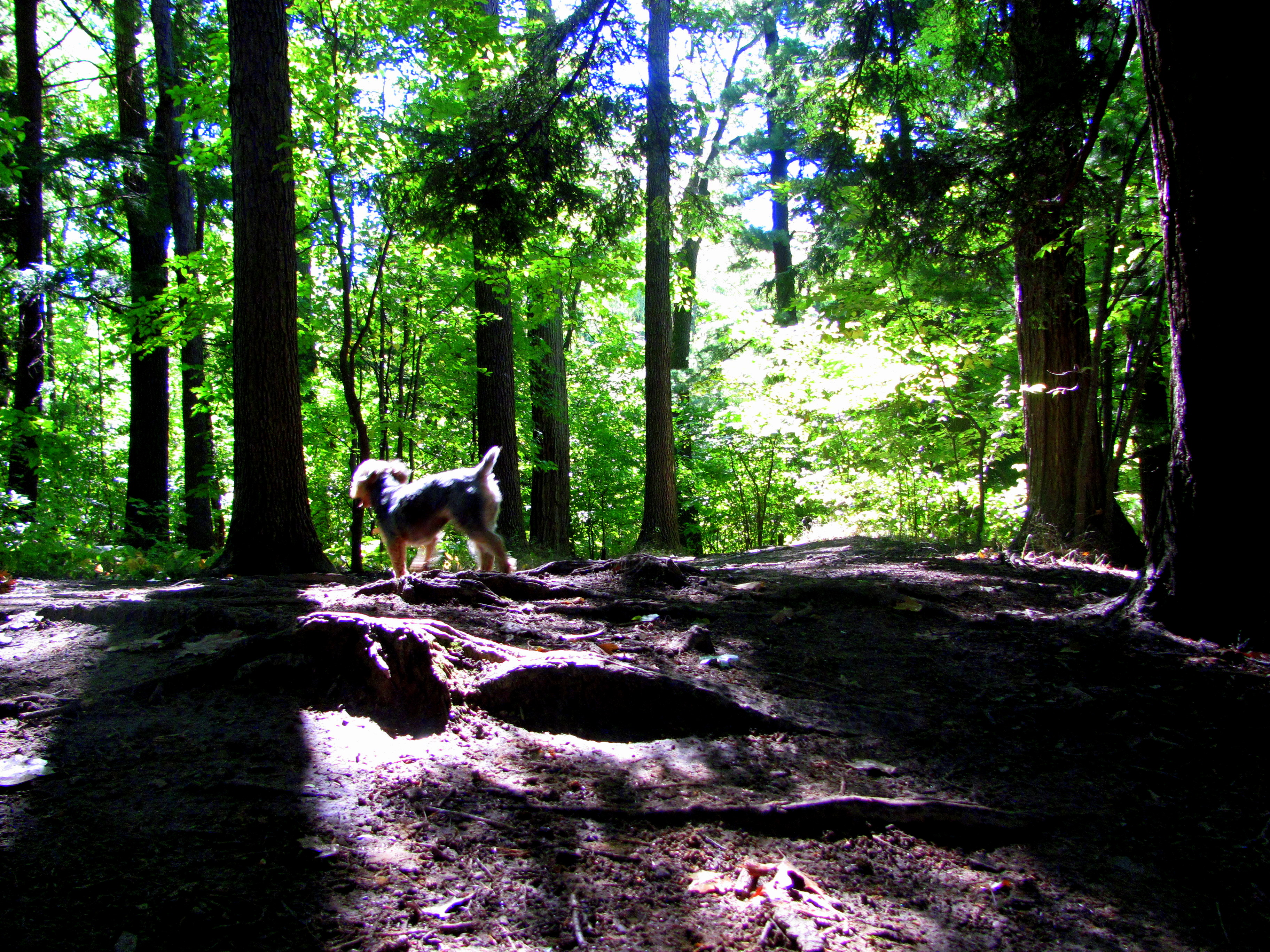
In a blog I kept while at the Canadian College of Naturopathic Medicine, I wrote many posts about how Coco taught me to live. He brought me fully into my kinship with nature. We hiked through parks in Toronto and logged hundreds of kilometres on the Bruce Trail. I remember him gliding ahead along the narrow path, light streaming through the trees, an orchestra of birds punctuating the quiet rhythm of our footsteps and breath, hearts held by the magnanimous life that was all around.
Dogs offer us a pure form of love and connection. Their unconditional love can soothe the wounds accumulated from our imperfect human attachments.
They are grounded, noses connected to the Earth. And this grounding keeps their lives in the moment, up for adventure, and free from the overthinking and neurosis that block our trust and joy.
Dogs remind us of our ancient history, when we lived in tune with nature’s frequencies, a time long forgotten but deeply missed. Dogs’ presence tells us the truth: the doors on our cages and cubicles are unlocked. We are still wild. And the earth patiently awaits our return.
Nature has guided me through pain and heartache. When I lose touch with myself, I return to the beach and the forest to find it. Coco taught me this.
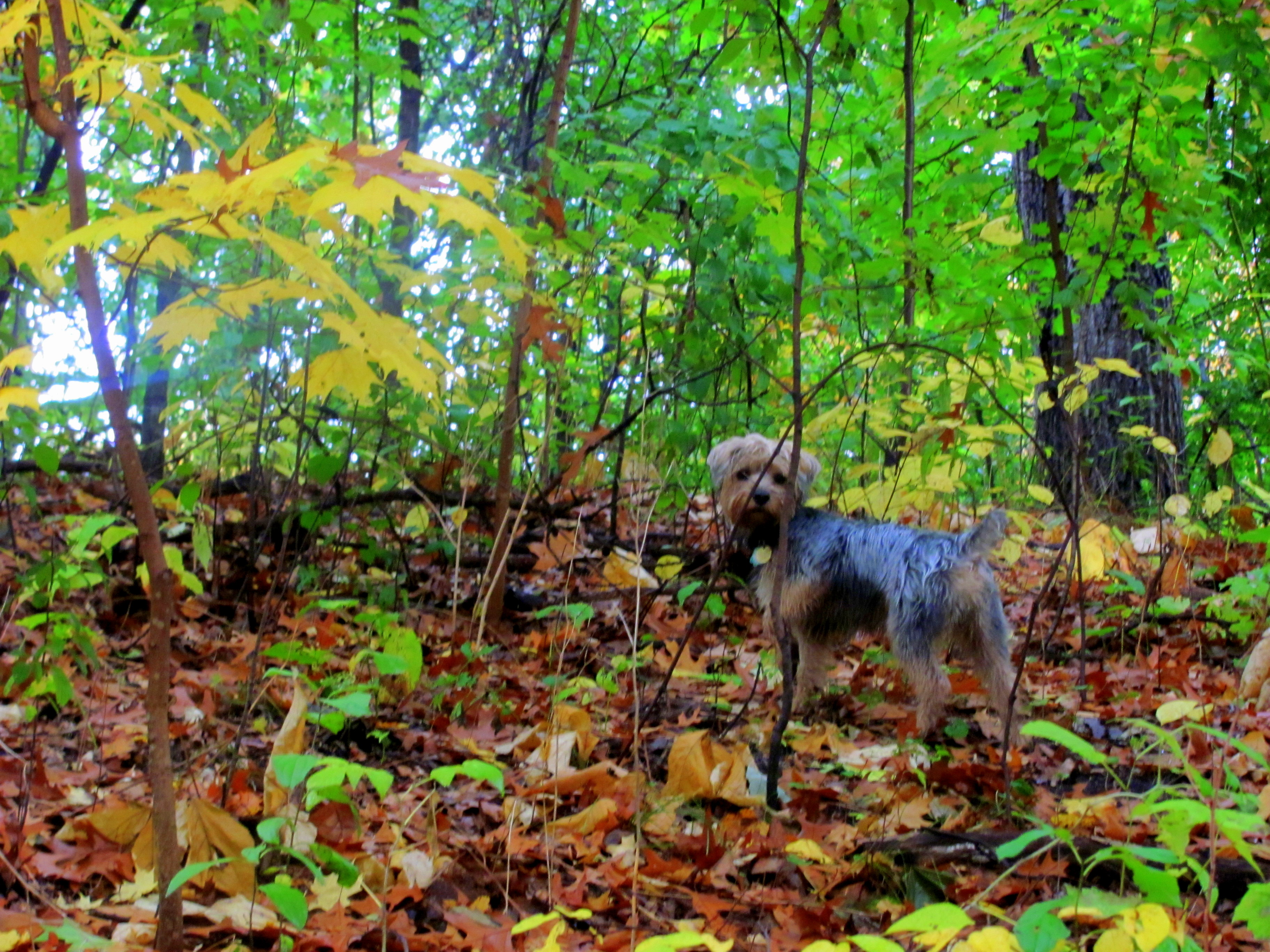
He brought me to the forest, set me free, and left me there. He died on April 22, 2025. And I’ve returned many times to find him among the roots, the leaves, and the joy of other dogs living fully, who love their lives enough to lose them.
Over a year ago, Coco stopped eating. As the vet was running tests, my stomach turned over with anguish. He was diagnosed with an inflammatory bowel disease, and his prognosis was poor. But, despite their size and teddy bear appearance, terriers are persistent, tenacious fighters. After a few days of steroids, antibiotics, and a special diet, Coco miraculously bounced back. Still, the vet cautioned that he would likely need to be on prednisone and his condition closely monitored for the rest of his life.
Over the next year, Coco stoically trudged on. He kept up his fighting spirit until his last day—terriers never give up. Although duller and more easily fatigued, he motored along Great Lakes beaches and hiked in Nova Scotia. When he could no longer walk much, he rolled around in his dog stroller or rode on my back. When he was too tired to lift his head, I sometimes walked alone.
The prednisone thinned his fur, whithered his muscles, and messed with his sleep. I had to carry him up and downstairs, help him stand, and carry him outside. Each night, at two, three, four in the morning, sometimes several times a night, I would haul myself out of bed, nauseous with exhaustion, to take him out. I would fumble for my keys and coat in the darkness, and we would stand outside, wordlessly shivering with cold. I would wait for him, watching the snow blow in the glow of the street lamps, my body begging to return to the warmth of my bed.
Other nights, I was too late and calmly cleaned his mess while he watched me, confused and ashamed.
Eventually, the vet confirmed his kidneys were failing. He stopped keeping his food down. He began coughing and struggling to breathe. His heart was failing.
When referring to putting down a pet, people will tell you you’ll know the right time. They will tell you a dog won’t get up, or they’ll stop eating. Or, the vet will confirm it, waking you from your indecision and denial. Sometimes old dogs will pass peacefully in their sleep. Most likely, however, you will have to decide when, where, and how to end your best friend’s life.
Euthanasia is an impossible choice, like cutting off a part of yourself to spare the whole. Coco couldn’t tell me in words what he wanted, but if he could, how could one choose a road unseen, with the destination unknown? When pets die, the poem goes, they cross the Rainbow Bridge. Beyond the bridge lies a lush, sunlit meadow, where animals run free with old friends, and rest in warmth and comfort, nourished and unhurt. It’s an image that’s brought comfort to many pet owners. I don’t know if the Rainbow Bridge exists, but I knew he was suffering here.
My heart cracked under the weight of it all, and I made the call: I would lovingly release him from this life and guide him to the bridge. It was time.
There is a saying in veterinary medicine, “Better a month too early than a day too late,” and I let that steady my hand as I made the arrangement for a hospice vet to come to our house on April 22nd at 4:00 p.m.
When the vet came and eventually took Coco away, she left a pamphlet that contained this poem, called The Last Battle, author unknown, that reads,
If it should be that I grow frail and weak
And pain should keep me from my sleep,
Then will you do what must be done,
For this — the last battle — can’t be won.
You will be sad I understand,
But don’t let grief then stay your hand,
For on this day, more than the rest,
Your love and friendship must stand the test.
We have had so many happy years,
You wouldn’t want me to suffer so.
When the time comes, please let me go.
Many pet owners wrestle with the idea that we shouldn’t have the power to end our companions’ lives. Yet we’ve made every other choice for them: what they eat, where they sleep, when they go out. “Euthanasia” means “good death.” Offering this to Coco felt like a final act of stewardship: a responsibility to our bond and a firm expression of my love. When the time comes, please let me go.
It is hard to describe those final days, as we both hung between worlds, at the threshold of the Rainbow Bridge. Time slowed down. Every breath and moment hung heavy before evaporating into the ethers of the past. Soon, the past was all we’d have.
Anxiety, fear, and doubt swirling around, I found the eye of the hurricane on those last days. We walked to the lake on our final night together to watch the sunset. A thick mist fell, and we settled on Muskoka chairs, Coco’s head tucked, our breathing in sync. I could feel his last few heartbeats against my thigh.
On April 22nd, I gave him a Perfect Last Day. We went to the Pet Store, ate cheeseburgers, wheeled through High Park, and took our last hike together, the sun warming our faces. Something in the air must have revealed the gravity of the moment, the brevity of our time and the impending goodbye, because people lingered around us.
Two older women walking in the park smiled as they passed, “He looks so comfortable in his stroller,” one said. When I told them it was his last day, they both embraced me as I sobbed. One of them took a picture of us together.
After saying goodbye to her beloved 19-year-old dog, my friend and her husband went to the lake. A lady snapped a photo of them, saying they looked beautiful watching the sunrise together. “Sometimes people can sense when a stranger needs a beautiful moment to hold on to,” she said. Grief can soften our walls and invite others in.
We went home and sat together that last hour, waiting for the vet. He lay on my chest. The sun was beautiful. I saw the shape of Yorkies in the clouds.
His last moments were peaceful; he never left my arms. “He’s gone,” said the hospice vet, gently. She gathered her things as I sat with him. Then she wrapped him up, and they were gone.
The mantle of loneliness wrapped me tightly. Now it was just my grief and I.
The word “grief” comes from the Latin “gravis,” which means “heavy” or “serious.” Related words are “grave,” “gravity,” and even “gravitas.”
As a society, we squirm away from grief. We fumble with the words to comfort and wrestle away from the stronghold of sorrow. We numb, distract, try to move on, and forget. But life’s truth is harsh: we will lose everything we love. Grief comes for us all; it is the work of the living to hold and process it.
Psychoanalyst Francis Weller says, “Grief is much more than an emotion. It is one of the central faculties of being human.
“Grief is a core capacity that allows us to digest the most bitter experiences into something meaningful, perhaps beautiful, something vital and alive.”
So often, depression is not depression at all, but oppression, unprocessed grief that accumulates around the heart like a sediment, blocking us from our vitality and the joy of our being (Weller, 2015). To chip away at this hardened sludge, we must learn to sit with grief, invite it in, name it, and give it space to release, thus becoming “skilled in the art of loss.” Grief work keeps the heart fluid and soft.
And so, I wade into the dark waters, welcomed by the other bereaved. When we dive into the blackness, we join the collective pool of human suffering. This community expands the heart’s container, deepening its wells of compassion. Grief work is soul work. It is necessary work.
Poet Rainer Maria Rilke says, “Yet, no matter how deeply I go down into myself, my God is dark, and like a webbing made of a hundred roots that drink in silence.”
We live in a culture of lightness, upward mobility, positivity, and optimism. We fear the descent into blackness.But my God is dark. We were gestated in the darkness of our mothers’ wombs. Our hearts beat in darkness. Seeds grow below the dark depths of the earth. Sometimes, we must enter the shadows, the depths of despair, to bring the riches back up to the light. Alchemical Psychology calls this descent “the nigredo.”
In the nigredo of grief, the ego softens. The rigid self we once hid behind begins to dissolve (Barn Life Recovery, 2020). We lose our usual sense of who we are, yet somehow become more fully ourselves. As we feel the pain of losing what we loved, we also feel love in its purest form. This is soul work because in the end, the soul remains.
Terry Tempest Williams says, “Grief dares us to love once more.”
What if we approach our grief experience not with resistance but hands together and head bowed in reverence?
According to Francis Weller, when we hold gratitude in one hand and grief in the other, and bring them together, we are now in the prayer of life. Oscar Wilde says, “Where there is sorrow, there is holy ground.”
In The Smell of Rain on Dust, Martín Prechtel writes that grief work is not only about expressing sorrow but transforming pain into beauty using the gifts given by the spirits. Grief requires a container and release. We must keep it warm through writing, poetry, meditation, contemplation, and art. Through creating, we weave the memories of those we’ve lost into the fabric of life and unravel the cycles of trauma born from unexpressed grief.
The morning after Coco died, I leapt out of the shower in a panic. I grabbed my phone and texted the hospice vet, asking them to change the urn I requested. I got back in the shower, calmer. Wait, was I crazy? I settled for a second, then threw open the shower curtain, suds flying, and texted back, “Sorry, no wait, the original decision stands, sorry, I changed my mind…again.” Was I insane?
Before Coco died, they had talked about the ashes. Did I want a private cremation? What did I wish for the ashes? The details had felt irrelevant, far away. I just wanted my dog. In Scandinavia, an individual would spend a sacred season in the ashes of their loss, occupying a parallel world of mourning, from which they would emerge changed (Weller, 2015). Ashes carry the gravity of what we’ve lost. My soul, too, knew it wanted to walk with the ashes. What would be reborn there?
In my closet now sits a memory box containing some of Coco’s things: his sweater, a collar, and a cherry twig, with buds, which I picked up the day of our last hike in a moment frozen in late April before the cherries blossomed. Martin Pretchel reminds us that grief is praise. It is a natural way to honour what one misses.
Many people offered comforting words, reminding me that Coco had a “Good Life.” In his book Going Home: Finding Peace When Pets Die, John Katz (2012) discusses the idea of the “Good Life.” He says, “When you clear away all of the emotional confusion, there is this: all we can give our pets is a Good Life. We can’t do more than that. We miss them because that life was good, loving, and joyful. Too often, this truth is lost in our grieving.”
Camus echoes the sentiment in saying, “The deeper the sorrow, the greater the joy.”
The box contains a framed picture of us at a lake in Quebec, watching the sunset—one beautiful moment among many of a life well-lived.
One thing people have said is that Coco will always be with me. I want to believe this, but as the distance from our last day grows, I feel him fading. I haven’t forgotten, but his presence feels quieter, harder to reach.
In his beautiful poem, For Grief, John O’Donahue writes,
Gradually, you will learn acquaintance
With the invisible form of your departed;
And, when the work of grief is done,
The wound of loss will heal
And you will have learned
To wean your eyes
From that gap in the air
And be able to enter the hearth
In your soul where your loved one
Has awaited your return
All the time.
Cheryl Strayed (2021) describes how her mother wanted her tombstone to say, I am always with you. “But I want you actually with me!” She protested. Coco and I will never make new memories again. He is another ghost gone into the gap in the air.
On the 30th anniversary of her mother’s death, Strayed writes, “Thirty years gone and my mother is always with me. Thirty years gone, and I still ache for her every day. Thirty years gone, and my sorrow has sweetened into gratitude.
“How lucky I am to have been her daughter. To still be. To feel her shimmering in my bones with every step.”
Sweet, little Coco, you will always be my dog.
Last week, I had my brother’s dog, Toby, with me. He is a 4-year-old mini golden doodle with nowhere to go while my brother and sister-in-law work, so I take him out sometimes. That day, he bounded around the beach, wild with joy, with a newfound freedom that must have felt like a dream.
I watched him with a heart that wanted to meet him in his happiness, but my heart still feels lost in the nigredo. When the work of grief is done, and the sediment is cleared, I’m not sure what I will find in my soul’s hearth, on the other side of sorrow’s edge. Maybe it will be Toby’s wild doggy grin, inviting me to play and dance among the dunes.
The poem I Walk With You (Author Unknown) goes,
I stood by your bed last night, I came to have a peep. I could see that you were crying, You found it hard to sleep.
I whined to you softly as you brushed away a tear, “It’s me, I haven’t left you, I’m well, I’m fine, I’m here.”
I was close to you at breakfast, I watched you pour the tea, You were thinking of the many times, your hands reached down to me.
I was with you at the shops today, Your arms were getting sore. I longed to take your parcels, I wish I could do more.
I was with you at my grave today, You tend it with such care. I want to reassure you, that I’m not lying there.
I walked with you towards the house, as you fumbled for your key. I gently put my paw on you, I smiled and said “it’s me.”
You looked so very tired, and sank into a chair. I tried so hard to let you know, that I was standing there.
It’s possible for me, to be so near you everyday. To say to you with certainty, “I never went away.”
You sat there very quietly, then smiled, I think you knew … In the stillness of that evening, I was very close to you.
The day is over and I smile and watch you yawning And say “goodnight, God bless, I’ll see you in the morning.”
And when the time is right for you to cross the brief divide, I’ll rush across to greet you and we’ll stand, side by side.
I have so many things to show you, there is so much for you to see. Be patient, live your journey out, then come home to be with me.
Last year, Nonna passed away, a few weeks before her 97th birthday. We must carry her with us, telling the “Nonna Stories” that capture her witty mind and fierce heart.
I took Toby to the woods where Coco and I used to walk. Young and free, he tore through the trees. “He doesn’t hike like Coco,” I told my mom. “He runs around in circles and doesn’t listen.”
“He’ll learn,” She said.
Last week, we found a quiet rhythm as we walked; Toby was a few paces ahead. He stopped, turned, and waited for me. Birdsong carried through the stillness. Something in the way he cocked his head reminded me of Coco. My heart still feels empty and full of missing him, but maybe, in the quiet hearth of my soul, head tilted, ears listening, he waits, too,
I have been a vegan for 6 years. I also suffer from mental health conditions and possible hormonal imbalances. After doing some research on diets for anxiety and depression, I found that most of them include meat and animal products. I’m wondering: can my vegan diet be harming my mental health? I am primarily a vegan for ethical reasons and would hate to have to harm animals unless you think it’s absolutely necessary for promoting my mental health and wellness.”
Nutrition, especially where it pertains to more emotionally-charged topics like human health, the environment, or animal welfare, is surprisingly controversial.
I know that broaching this subject is a little bit like walking into a lion’s den (lions, for the record, are not vegans), therefore let me preface this conversation with a few disclaimers.
In writing about veganism and mental health, I’m not looking to get into a debate. I am writing to provide information for those who are wondering if it is possible to heal mental health and hormonal conditions, including women’s health conditions, thyroid conditions and adrenal conditions, while following an entirely plant-based diet.
If you feel that you might be triggered by this information and are not willing to approach this essay with an open mind, then this article is not for you.
Let me point out that I fully understand and sympathize with the ethical arguments for veganism. In my 20’s I was vegetarian for five years. For one of those years I was a vegan. Contrary to what some die-hard vegan fans have suggested, I did follow the diet “right” by eating whole foods, balancing the macronutrients of my meals (as best I could), and striving to eat enough. I eventually had to stop, but it was not because I “missed meat”.
While following a vegetarian diet, I took comfort in the fact that no animal had to die for me to survive. I loved the taste of plant-based foods and the ease of preparing them. I was satisfied in knowing that my diet was having a minimal impact on the environment.
(I also enjoyed bathing in the feelings of moral superiority that this diet earned me. However, that’s besides the point.)
Around that time, I read The Ethics of What We Eat by Peter Singer, which remains the single most thought-provoking book on human nutrition that I have read to this day (and I have read mountains of books on human nutrition).
In no way do I advocate for factory farming practices. I urge omnivores to consume the most ethically sourced meat, fish, eggs, and dairy that they can afford. Not only is sustainable animal farming better for animal welfare and for the environment, it is better for human health.
I don’t push for any single one-size-fits-all diet. I believe that an individual determines his or her “perfect” diet through experience. I carefully approach conversations about diet with my patients to avoid shaming their eating habits and pressuring them into a diet that they feel uncomfortable with.
That being said, it is my duty as a doctor to provide my patients with all the information they need to make empowered choices by drawing on the 15 years I have spent studying nutrition through formal education, and personal and clinical experience.
While it may certainly be possible to survive and, perhaps even thrive (depending on your genetics, most likely), on a vegan or vegetarian diet, there are major limitations to this diet that we need to face if we’re committed to supporting optimal mental and hormonal health.
The intention of this essay is to outline some of these limitations.
Protein quality and quantity:
Protein makes up 16% of the human body (62% is water). It is required for body structure: our bones, muscles, connective tissues, skin and hair.
Amino acids, which make up protein, comprise the hormones and neurotransmitters that regulate our mood and gene signalling.
Tryptophan, an amino acid, is used to make serotonin and melatonin, hormones that enable use to regulate our feelings of well-being and circadian rhythms, respectively. Cysteine is used to make glutathione, the main antioxidant of the body that neutralizes cancer-causing free radicals, prevents damage to our DNA, and protects us from the incessant chemical onslaught of our increasingly toxic lives. Glycine and GABA calm the nervous system, prevent over-activation of our brains’ fear centres, and soothe anxiety. Glutamine stimulates the nervous system and fuels our gut and kidney cells, allowing us to absorb the nutrients from our food and filter waste from our bodies.
The human body is essentially a protein sac filled with water that hums with the metabolic activity orchestrated by tens of thousands of enzymes, which are also protein.
When it comes to dietary proteins, not all are created equal. Foods that claim the title “complete proteins” boast all 9 essential amino acids that are not synthesized by the body and must be obtained exclusively from diet. Many vegetarian sources of protein are not complete proteins, and therefore protein-combining must be practiced to avoid deficiency in specific amino acids
Proteins also differ in their absorbability. Some vegan foods rich in protein contain anti-nutrients or fibres that make them difficult to digest. For example, the protein digestibility of whey (from dairy) or egg is 100%, meaning that 100% of the protein from these foods is absorbed. In contrast, only 75% of the protein in black beans is absorbed. Even more dismally, those who hope to get a significant source of their protein from the peanut butter on their morning toast are only absorbing about 52% of it.
The Recommended Daily Allowance (RDA) for protein is 0.8 g per kg of body weight for the average person. However, when it comes to supporting optimal health, the RDAs of important nutrients are set notoriously low. In my opinion, even higher nutrients are required for those with chronic health conditions such as mental health issues, chronic stress, hormonal imbalances, obesity, diabetes, cardiovascular disease, cancer, and autoimmune disease, to name a few.
For my patients I tend to recommend between 1.0 to 1.2 g of protein per kg of body weight per day. For those who are particularly active, who need to lose weight, and who are obtaining their protein from lower-absorbable sources, I may even recommend higher amounts. For women with conditions like PCOS, depression, and anxiety, I often recommend at least 30 g of protein per meal, especially at breakfast, to balance blood sugar, fuel neurotransmitter synthesis, sustain energy throughout the day, and promote optimal adrenal function. I believe the RDA for protein to prevent muscle wasting is set far too low. This is especially true if the protein sources are difficult to digest and of lower quality.
But what about claims that high protein diets can be detrimental to our kidney health? A one-year crossover study showed that active men who consumed very high amounts of protein—over 3 g of protein per kg of body weight—suffered no ill effects.
Getting adequate protein is difficult on a vegan diet but not impossible. Tracking your macronutrients and considering supplementing with a high-quality protein powder, may be required.
Understanding exactly how much protein your diet delivers is essential. For instance, while quinoa is a complete protein, containing all 9 essential amino acids, it only contains 8 g of protein per cup. One cup of black beans contains 39 g of protein but only 29 g are absorbed.
Furthermore, for conditions like PCOS that require managing carbohydrate intake, getting the protein without the additional carbs can be a challenge. Legumes typically contain a 3:1 ratio of carbs to protein—one cup of black beans contains 116 g of carbohydrates. This is often too high for the many women suffering from the mental health and hormonal issues that I treat in my practice, who often feel best when keeping their dietary carbohydrate intake well under 150 g a day.
Autoimmunity:
Chronic inflammation runs rampant in the bodies of many of my patients. More research is coming out showing that inflammation is at the root of most chronic health complaints, such as mental health conditions like depression and bipolar disorder, and hormonal conditions like PCOS and endometriosis. Cardiovascular disease and diabetes are recently thought to begin as autoimmune diseases, spurred on by chronic inflammation.
To manage conditions of autoimmunity and chronic inflammation, it is often appropriate to follow an “anti-inflammatory” diet that is low in allergenic potential.
For patients with hormonal issues, autoimmunity, gut issues, and mental health conditions (which research shows are inflammatory conditions are their root), reducing the diet down to leafy green vegetables, chicken, beef and fish can aid in lowering inflammation, healing the gut and restoring immune function. After a time, foods are slowly reintroduced, to find out what the body can tolerate.
Grains and legumes contain anti-nutrients like lectins and phytates that protect plants from being ingested and destroyed. Along with other common allergenic foods like dairy and eggs, grains and legumes, with their anti-nutrient content, have a high potential for irritating the digestive tract, causing gastrointestinal inflammation and immune system activation, leading to chronic inflammation that permeates the entire body.
The higher protein content in legumes like peas, black beans, lentils, and soy, and grains like wheat and corn, makes these foods staples in plant-based diets. Therefore, even attempting an anti-inflammatory elimination diet as a vegan is virtually impossible. Vegetarian diets are hardly better, as vegetarians often rely on dairy and eggs to balance their diet, both of which are common food sensitivities that can trigger autoimmunity and inflammation.
Vegan studies:
Doesn’t following a plant-based diet confer amazing health benefits, though?
While many studies of vegan and vegetarian diets show benefit for improving markers of various metabolic conditions, like diabetes and cardiovascular disease, it is important to keep in mind that most of these publications are comparing a diet rich in whole grains, vegetables, fruit, nuts and seeds with the Standard American Diet, with its grain-fed, hormone-pumped animal byproducts deep-fried in rancid corn oil.
Therefore, it makes sense that adding a few servings of micronutrient-containing fruits and vegetables to your daily nutritional intake will radically alter your health status. When I first began my foray into the world of plant-based living I felt amazing too. After a few months, though, the health benefits slowly faltered and I started to suffer negative health consequences: weight gain, fatigue, depression, hypothyroidism, IBS, and various nutrient deficiencies.
My health improved when I added some animal products to my vegetarian diet and removed dairy, grains and legumes. However, my experience is a mere anecdote.
To my knowledge there hasn’t been a study comparing a whole foods-based diet that includes ethically-sourced animal products with a whole foods vegan diet. I would be very interested in seeing such a study if it is ever conducted.
Individual variability:
Rich Roll, a vegan super-athlete, is often dredged up as an example of how the human body can thrive on a plant-based diet. However, more than his diet, Rich’s individual genetics may have more to do with his success as an athlete (and his training, clearly).
Even after 8 years of returning to omnivorous living with occasional iron and desiccated liver supplementation, my ferritin level (a measure of iron status) still only hovers around 44 (80 is considered optimal).
My constitution is that of Parasympathetic Dominance. This means I look at a piece of toast and gain 10 lbs. I tend to suffer from congestive lymphatic conditions and a sluggish metabolism. I tend to have low energy unless I constantly stoke my metabolic furnace. When stressed, I tend to gain weight and slip into lethargic depression. If not taking care of myself, I get headaches and suffer from hormonal imbalances.
Like other parasympathetic doms, I tend to have a higher requirement for dietary iron and crave red meat and leafy green vegetables. I seem to do better with a diet higher in protein and healthy fats.
Many of the people I work with fit this profile as well. My patients are highly creative and intuitive, but also suffer from mental health and hormonal conditions and are very susceptible to stress. I find that most do better through moderating their carbohydrate intake, ensuring high micronutrient and healthy fat consumption, and eating more protein, particularly from some red meat.
New research into MTHFR genes reveals that certain diets may have more health benefits for certain individuals. About 40-60% of North Americans are unable to convert folic acid (a synthetic nutrient added to multivitamins and fortified grains) into methylfolate, which is used for a chemical process called “methylation”.
Methylation pathways are involved in the fight-or-flight response; the production and recycling of glutathione (the body’s master antioxidant); the detoxification of hormones, chemicals and heavy metals through the liver; genetic expression and DNA repair; neurotransmitter synthesis; cellular energy production; the repair of cells damaged by free radicals; balancing inflammation through the immune response, controlling T-cell production, and fighting infections, to name a few.
Individuals with impaired MTHFR function often suffer from autoimmune conditions and mental health conditions, such as depression. They tend to feel better when avoiding grains that contain folic acid and eating green leafy vegetables that contain methylfolate. They require higher amounts of protein in their diet. They require higher levels of vitamin B12, which is also important for methylation, and choline, found in eggs and liver, which helps bypass methylfolate pathways, working as an alternative methyl donor. Choline is also necessary for estrogen metabolism.
Nutrients Deficiencies:
You thought I would lead with this, didn’t you? I’ll bet you were wondering when this would come up:
B12:
Of course it’s no secret that the vegan diet is essentially devoid of vitamin B12, an important nutrient for detoxification, methylation, neurotransmitter synthesis and energy metabolism. Animal sources are the only sources of B12. Our gut bacteria can make B12, but how much is absorbed in the colon for the body’s use is not clear.
B12 deficiency is serious. A friend of a friend of mine (no, but really) suffered permanent neurological damage, leading to seizures and almost death, from B12 deficiency. The neurological damage caused by B12 deficiency is irreversible (I’ve had patients who experience some improvement with restoring B12 levels, but it can take some time and the progress is not always linear).
B12 deficiency can have serious neuropsychiatric symptoms that mimic severe bipolar disorder or schizophrenia and that resolve once B12 injections are given. Horrific case reports tell stories of B12-deficient patients treated with rounds of electric shocks for their “treatment-resistant” psychosis, before the true cause of their symptoms was uncovered.
The blood reference range for B12 is roughly 130-500 pmol/L but I find that people don’t feel their best until their levels are over 600, and many experience severe B12 deficiency symptoms under 300. This means that if your doctor tells you that “your blood levels are normal,” your body could still be operating at a sub-optimal level of B12.
For vegans, supplementing with a good, absorbable form of B12 is non-negotiable. B12 from vegetarian sources, such as dairy products, is damaged in the pasteurization process and therefore supplementation may still be required.
Other nutrients:
B12 aside, other nutrients that are commonly deficient in vegan diets are iron, zinc, iodine, EPA and DHA, choline, vitamin A and vitamin D, to name a few.
Zinc is essential for immune function, skin health, neurogenesis (making new brain cells), memory and cognition, gut integrity, neurotransmitter synthesis, and hormonal health, among other essential functions.
Iodine is required for thyroid and ovarian function. It is also important for estrogen detoxification.
Iron is important for supplying tissues with oxygen, optimal thyroid function, and fertility. Menstruating women are commonly operating at a sub-optimal level of iron, resulting in fatigue, dry skin, chronic infections, and heavy periods.
Vitamin D regulates over 1000 different genes in the body. Supplementing with D3 is required for the 70-90% of North Americans who are deficient. Sadly, vitamin D3 supplements are all animal sourced, obtained from the lanolin in sheep’s wool. D2 from mushrooms is a vegan form of vitamin D that is likely not as effective as animal-derived D3.
Vegans are 75% more deficient than omnivores in vitamin D, which is alarming, considering how deficient most North Americans are—that’s 1000 vegan genes that aren’t being properly regulated!
EPA and DHA, omega 3 fatty acids found in fish and algae, are essential for cell membranes and brain function. While DHA can be made from ALA, found in flax and walnuts, many of us are not effective at converting it. Even the best converters among us only synthesize about 18% of our ALA into DHA. Further, the conversion of ALA to DHA requires zinc and iron, two nutrients that are typically deficient in vegan diets.
Even for omnivorous patients with mental health conditions, supplementation of EPA is often required for therapeutic benefit. Vegan supplements of algae-derived EPA and DHA exist, however, many of the studies that show benefit for fish oil supplementation in depression, bipolar and OCD require that the EPA to DHA ratio be 3 to 1 or higher. This high EPA to DHA ratio is not available in algae-sourced supplements that I have seen, making it almost impossible to derive enough EPA from vegan sources.
That being said, it is possible to supplement with iron bisglcyinate, iodine, zinc picolinate and vitamin A, inject methylcobalamin weekly, chug algae oil by the jugful, and drip vitamin D2 drops on your tongue and hope for the best.
You can pray to the methylation gods that your MTHFR enzymes are all operating at top speed so that your body doesn’t need to depend on protein and choline-dependent pathways for its liver function and DNA repair.
You can dump Vega protein powder into your smoothies and hope that you don’t have a sensitivity to grains and legumes (vegan protein powders usually contain some combo of rice, soy, and pea). You can obsessively track your macronutrients on My Fitness Pal.
You might still be ok.
There are a few people, the Rich Rolls of the world, who will claim that they feel great on an entirely plant-based diet. They do all of the above-mentioned things and feel amazing and I’m happy to hear it! However, I wonder how these genetically gifted individuals would fare if following a nutritionally complete whole foods omnivorous diet that contains grass-fed chicken, fish, meat, gelatin, eggs and, perhaps, dairy, in addition to a variety of plant foods.
If just one important nutrient pathway that depends on iodine, zinc, vitamin D, iron, B12, EPA or DHA is working sub-optimally, if you’re suffering from a hormonal condition, a mental illness, an autoimmune disease, or a digestive issue, then it’s possible that, if you follow a vegan or vegetarian diet, you’ll never feel as well as you’re meant to.
In the words of a vegan-turned-omnivore friend of mine, when disclosing why she decided to start eating meat again:
“I still love the environment and animals, of course, but I just love myself more.”
As far as Canada’s Food Guide to Healthy Eating is concerned, naturopathic doctors differ in their views. In terms of a general guideline, I believe that it does a pretty good job of promoting a healthy diet: focusing on fruits and vegetables, whole grains, nuts and seeds, meat and protein. It even suggests adding healthy oils to the diet and supplementing with vitamin D. Not bad. But, as they say in my family, “Close, but no cigar.” I have one piece of beef with the Food Guide, and it’s not the beef, but rather another cow product that offends me: the outrageously huge influence on dairy.
I realized it one day, while spending a particularly delicious Saturday in one of the armchairs of the living room, feeling the sun warm my back as it streamed through the shutters: for the first time in a while, I didn’t feel stressed. Coco was draped across my back, lying on the back of the chair. As if on cue, he let out a long puff of a sigh, his eyes closed. Coco is never stressed, I thought to myself. And then I realized it: Coco is more naturopathic than any doctor could hope to be. As Dr. Stargrove said, at The Gathering in Chicago, “nature knows more than doctors ever will.” And Coco, with is furry body and leathery paws is much closer to nature than any of us will ever be.
October 19, 2012 ends another successful midterm week at CCNM. Not including our NPLEX 1 board exam, which was written in August, our first midterm week of 3rd year ticks a grand total of 61 CCNM exams off our growing lists.
For those of you loyal readers who have been hoping things on this blog would lighten up a bit, be careful what you wish for. Introducing the lightest topic on the planet: Woofstock 2012, the largest festival for dogs in North America.
India’s homeopathic hero, R. Sankaran, developed a theory for dosing homeopathic remedies. Homeopathic remedies are substances that are highly diluted. It is thought that the more diluted the remedy the more potent the dose, because of the remedy’s ability to communicate with the body on higher energetic level.
There’s something to be said for good company, sun and sand to bring you out of a dark, rainy slump. Last week was a particularly emotional one for me, which in part is due to my Reiki initiation, which can cause some energetic side effects, and some events happening on the home front.